Some people have thought that I was named after Thomas Aquinas. I am not sure whether they were disappointed to learn that I was likely named after Thomas the apostle, also known as the doubting one. Why? Because I was named after my grandfather on my Dad’s side. He was a faithful member of St Augustine’s Anglican church in Napier. As an Anglican, it was highly unlikely that he was named after Thomas Aquinas. So, since I was named after my grandfather, I most likely bear the name of Thomas the apostle. Still, in this regard I probably have connections with Thomas Aquinas who would have probably been named after the apostle. While he shared the enquiring, critical or doubting nature of the apostle, Thomas Aquinas also inherited the stubborn nature of his family. Today’s gospel from Mark 3:31-35 about Jesus’ mother and brothers looking for him reminds us of how Thomas Aquinas’ family had great difficulty in understanding his request to become a Dominican. He came from a noble family who had been educated by the Benedictines. It was thought that, because of his noble birth, he could have risen to a position of importance within the Benedictines. In an effort to change his mind, Thomas Aquines’ family kidnapped him and held him captive for a year. Still Thomas was determined and went on to become a Dominican who would eventually study under some of the great teachers in Paris and Cologne, including St Albert the Great. It was a time of great learning because the ancient writings of the Greek philosopher Aristotle had been rediscovered, writings which had been preserved down through the centuries by Muslim scholars. We should be grateful to the ancestors of our Muslim brothers and sisters for the great writings that emerged out of the study and systematic reflections of St Thomas Aquinas, who worked on a basic principle of Aristotle that truth cannot contradict truth. still, after all his great writings, including the Summa Theologica, he had a vision late in his life wherein he saw that all his writings were merely straw and he wrote no more. Let us pray, then, for scholars of all religious traditions that they may seek to commit themselves to search for that truth that crosses all boundaries and draws us into that destination of unity with the God of all life.
Thomas Rouse
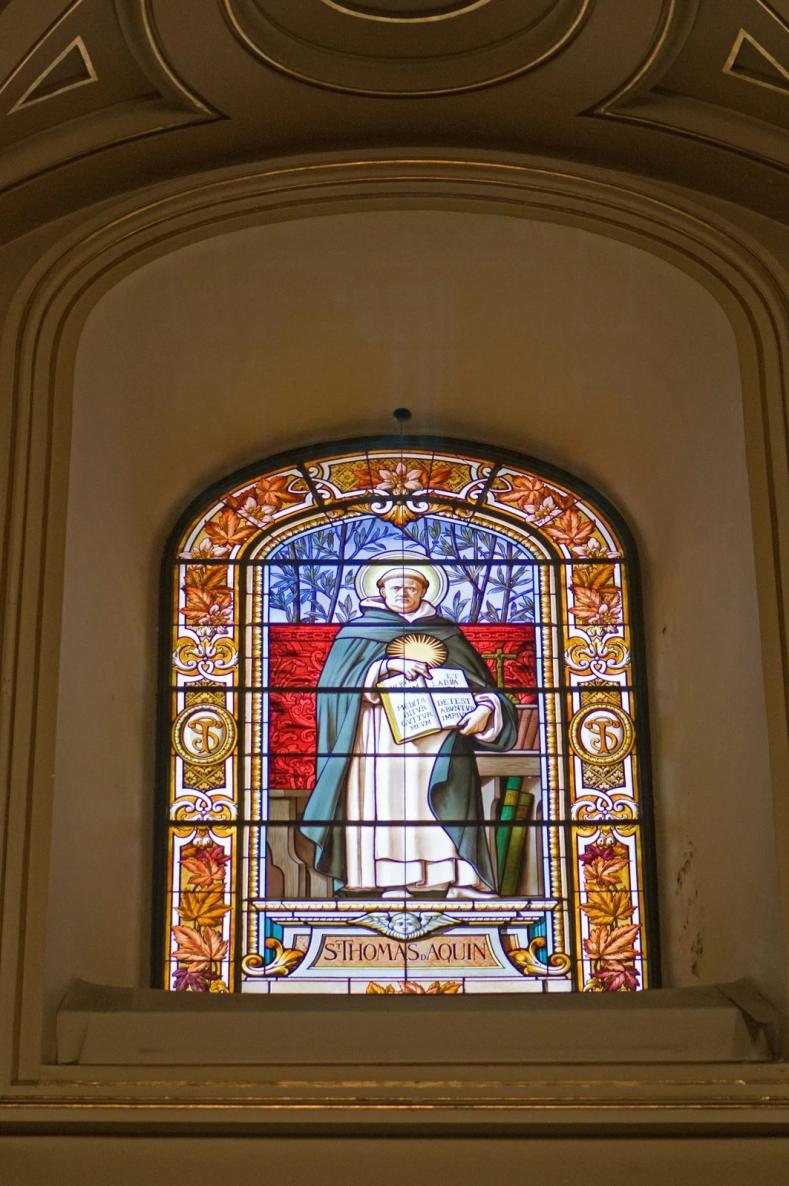 Photo - Canva



 Shop
Shop
Comments (0)