
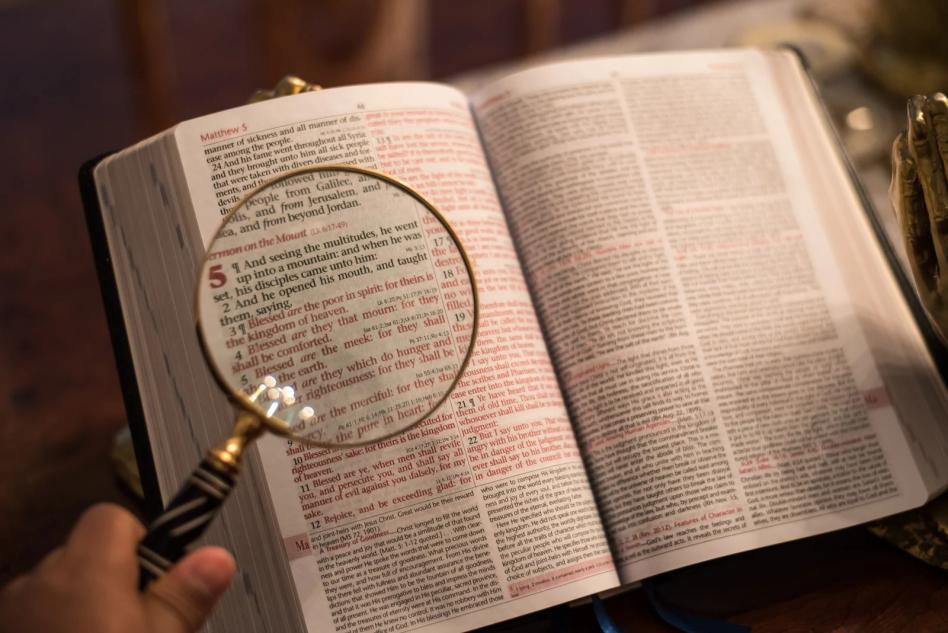
 Photo - Canva
It is hard to imagine how difficult it would have been for the early Christian missionaries and teachers to talk about their faith and about who Jesus is and what he achieved through his death and resurrection. In today’s first reading from Acts 13:13-25, we read about one of the earliest sermons preached by Paul. Now, bear in mind Paul’s situation. Having trained to be a Pharisee, Paul was well-versed in the Hebrew Bible or the Old Testament. He met Jesus in a vision on his way to Damascus who told him, “I am Jesus, whom you are persecuting.” So, from being a fierce persecutor of the church, he became a passionate believer in Jesus as “the Son of God”. But how to put this newfound faith into words was an enormous challenge. In meeting with the apostles during his brief visit to Jerusalem, he would have listened carefully to their accounts about Jesus’ ministry and teaching. Living for a year in Antioch, he would have seen what happened to people as they began to live out Jesus’ teaching. But how was he going to explain what happened when Jesus was put to death and then raised to life, and about the sending of the Spirit following Jesus’ return to the Father?
The one thing that Paul could rely on was his knowledge of the Hebrew Bible. And so, in this early sermon, where he is preaching to his fellow Jews, he begins by briefly recalling the story of their ancestors and how the promises made to them pointed to Jesus, as a descendant of David. Still, even those who tried to sincerely listen to Paul’s arguments about Jesus being the Saviour and Son of God would no doubt have been left wondering whether this could be true. Maybe what could have helped to gradually win people over was the power of hospitality. As Jesus says, in today’s gospel from John 13:16-20, “whoever welcomes the one I send welcomes me, and whoever welcomes me welcomes the one who sent me.” A winning smile can be even more convincing than a persuasive argument. I have learnt that more than once as I sat around the kava bowl in Fiji and watched people try to convince others about something they considered important. That was why the Antioch experience had such an impact on Paul. Here he saw people of diverse races and backgrounds finding joy in simply being together and sharing what they had in common, their humanity and their faith in Jesus Christ.
Tom Rouse




 Shop
Shop
Comments (0)