 Photo - Canva
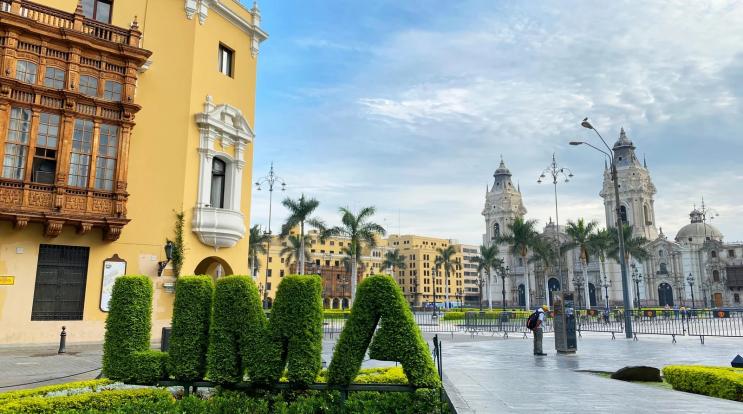
On May 19, the leaders of our various Regions and Mission Units along with some elected delegates and designated others will come together for a General Assembly in Lima, Peru. This is an event held every 6 years. The delegates are tasked with reviewing what has happened in the last 6 years and discerning the path forward for Columban Mission. A new leadership team will be elected to lead the society into the future.
In his preface to the Acts of the 1976 chapter/assembly Tony O’Brien the Superior General says “A chapter is a time of special grace. It is a time when the spirit of God helps us to rediscover our mission, to revise our apostolic methods and review our lives in the light of the gospel”. I have been reading through the Acts of previous assemblies noting how they changed the way we understand mission and engage with it. What follows are some of the developments that stood out for me.
The first GA that I remember took place in Dalgan while I was a student in 1970. It came at a time of change when the insights of Vatican II were starting to reshape our understanding of the church and its mission. It was felt to be the start of a new missionary era. While some readily embraced the changes, there was also resistance in some quarters within the church. This created tension during the 1970 assembly which continued through the 1976 and 1982 assemblies as the society worked out what mission meant in this new context. This tension was also experienced in the places where we worked. Much of the missionary activity of the church prior to Vatican II was shaped by the belief that outside the church there was no salvation. The task of mission was clear – to bring people into the church. The assembly noted that the specific purpose of missionary work is evangelisation and the planting of the church among those people and groups where she has not yet taken root.
As well as dealing with the influence of Vatican II we were also absorbing the statements emerging from the Conference of South American Bishops meeting in Medellin in 1968. The 1976 assembly, which was held in Baggio City in the Philippines, includes the call to “bring about full Christian liberation for the poor and oppressed” into its understanding of mission. The 1982 assembly was held in Lima, Peru, the home country of Gustavo Guitterez who is called the father of Liberation Theology. From this assembly there emerged a clear emphasis on evangelisation from the standpoint of solidarity with the poor and working for justice. Work for Justice and Peace remains a Columban priority, now linked to the Integrity of Creation ( JPIC). The 1982 assembly also recognised that “the seeds of the gospel are found in other religions and the deeper realization that salvation is also found beyond the church”. This built on the statement in the 1976 assembly calling on the Society to facilitate dialogue between Christian and non-Christians. It gave fresh impetus to work in Inter Religious Dialogue (IRD), which also remains as a Columban priority.
The 1982 assembly also decided in favour of inviting candidates from the local churches in which we work to become members of the society. Since that decision was made almost 60 Columbans from The Philippines, Korea, Fiji, Tonga, Chile, Peru, and China were ordained. The recent ordination of Francis Xavier La Aung added Myanmar to that list. About half the members at the 2024 Assembly come from this group. The delegates also committed the society to encouraging qualified laity to participate in the mission of the church. I am not sure how many Lay Missionaries joined the Columban Lay Missionary Program when it was established but the number was significant as was the contribution they made and continue to make to mission in many parts of the world.
 Columban Leadership Team: Alvaro Martinez Ibanez, Tim Mulroy (Society Leader), Kang Seung-Won Joseph and Brian Vale (Society Vicar)
The 1988 chapter was held in Pusan in South Korea. The realities of mission work in China, Taiwan, Korea and Japan were vastly different from those of South America and the Philippines. The latter were predominantly Catholic areas where poverty and oppression were rife. In Asia the dominance of other religions created a very different context for mission. The 1988 assembly picked up especially on the concepts of dialogue and inculturation. It encouraged the recruitment, training, and support of lay teachers and other professional to go to China through the AITECE program. By 1994 over 100 teachers were sent into Chinese universities.
It also noted that the plight of the poor is intimately related to what is happening to the earth and so they spoke of solidarity with the poor from an ecological perspective. This ecological perspective continues to shape the lives and work of Columban Missionaries, even more so now that we know more clearly the extent of the threat to our earth and all life on it that is represented by climate change.
Before 1982 our society drew its ordained members from the English-speaking world – Ireland, England, the USA, Australia, and New Zealand. With the addition of members from a much wider base of languages and cultures, the 1994 assembly recognised the need to work on what it means to be a multicultural Society. Working with Columban Lay Missionaries from a variety of backgrounds and cultures also highlighted this need. One of the guest speaker events we had in preparation for the 2024 assembly was entitled “A small multicultural missionary group on a Synodal Journey”, which points to the ongoing challenges we face in this area. To be continued....
Fr Pat O'Shea lives and works in Aotearoa/New Zealand


 Shop
Shop
Comments (0)